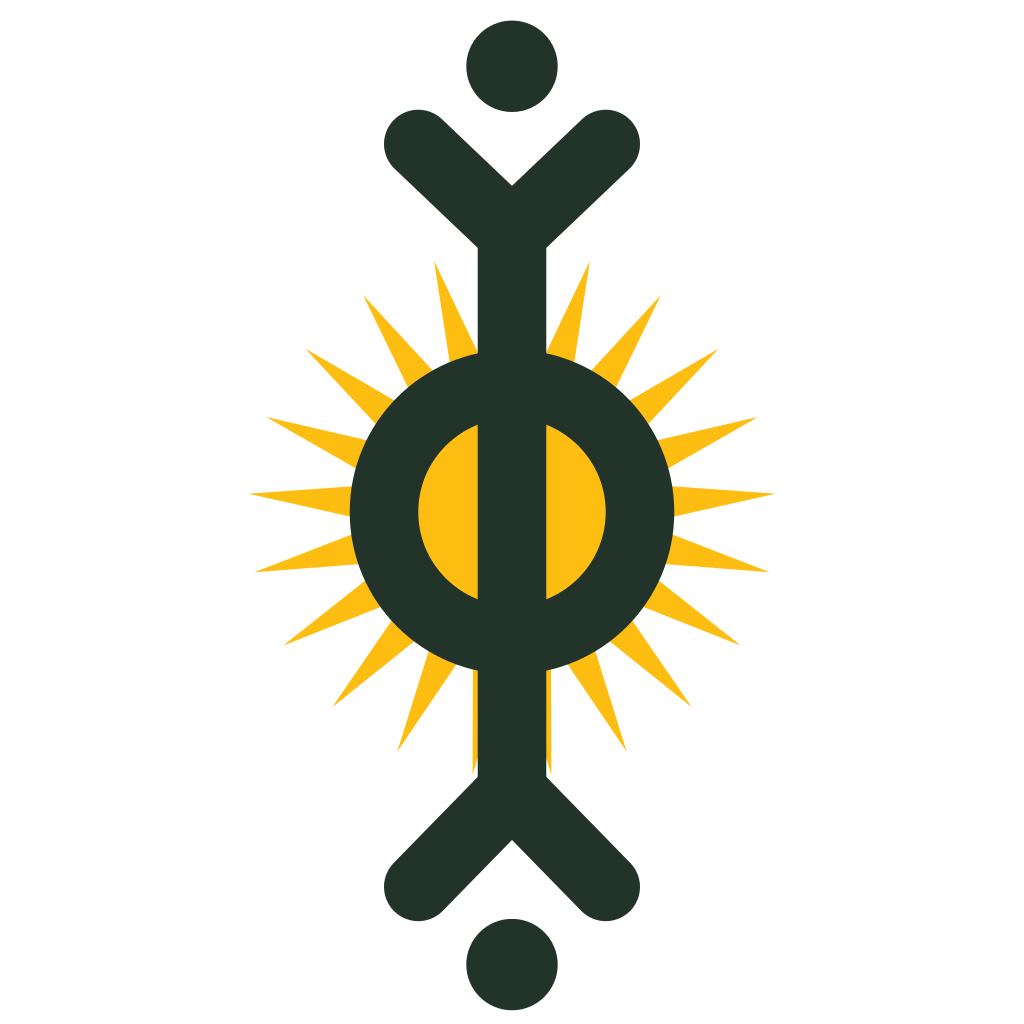
The name and the logo
Why zimankit, and where its sign and its sun come from.
The name
Ziman (زمان) means “language” in both Sorani and Kurmanji, and a kit is a set of tools: zimankit, زمانکیت, is a set of tools for the Kurdish language.
The logo
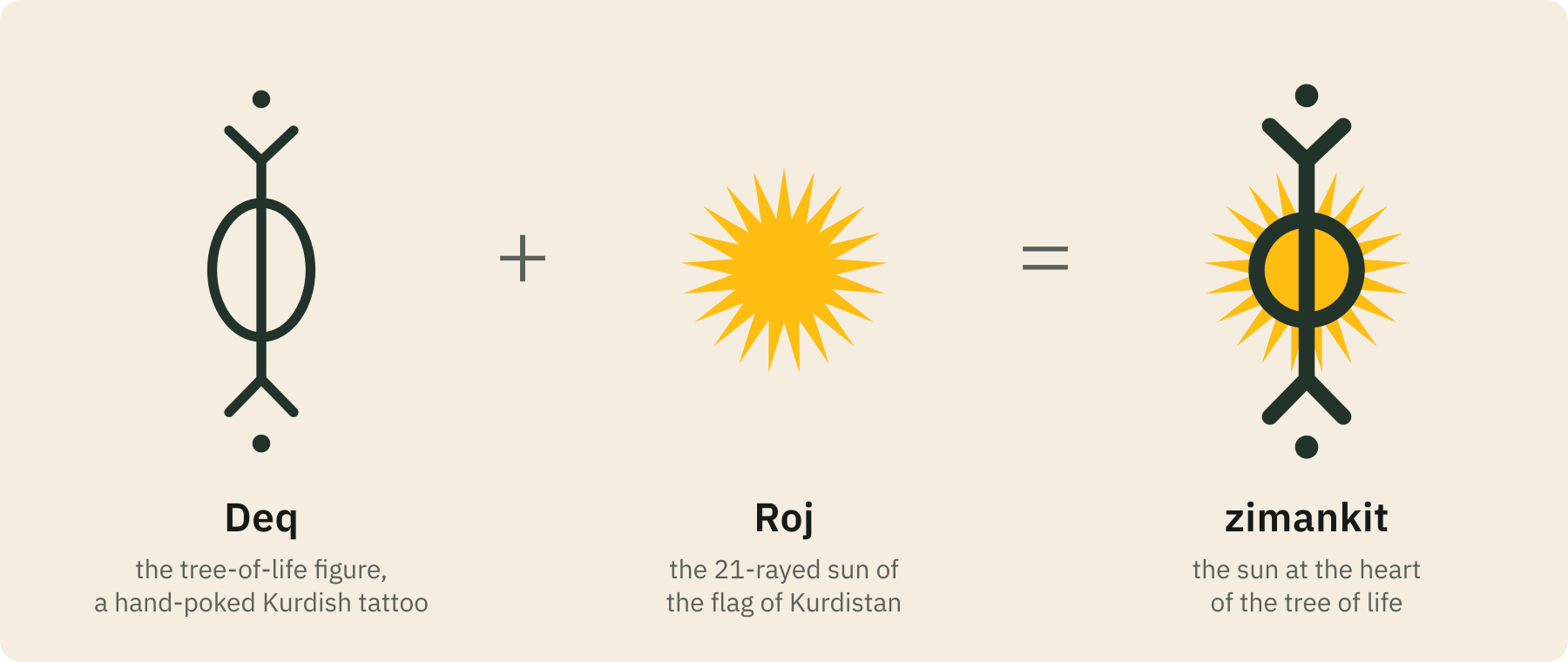
Deq: the Kurdish tattoo
Deq (دەق; also called xal, خاڵ) is the traditional hand-poked tattoo of the Kurds, worn above all by women, on the face and hands. Among Yazidi women it has carried even greater weight, as part of religious life. Neighbouring Arab and Turkish communities knew a very similar practice, often called daqq.
How it was made. Women of the community did the tattooing, often a mother tattooing her own children. The design was drawn on the skin and pricked with a sewing needle. An ink of soot mixed with breast milk was spread over it, traditionally the milk of a mother of a daughter, which was believed to make the mark permanent. Herbs or ox bile were sometimes added.
What it meant. A deq was never only decoration. Depending on the sign and where it was placed, it could protect against evil and illness, carry a wish for health and fertility, or serve as a remedy (dots at the temples against migraine). Its motifs come mostly from nature: stars, the sun and the moon, plants and crops, tools, birds and deer. The meaning of a sign can change from one community to another.
Decline and revival. The practice largely stopped in the second half of the twentieth century. Many came to see it as old-fashioned or as forbidden by religion, and henna often took its place. Today, deq is being revived as an expression of Kurdish identity, often worn as a vertical line of small signs down the spine or the arm.
Deq today
These images show how deq signs are worn and drawn today. The tree-of-life figure that the logo is built on appears in each of them.
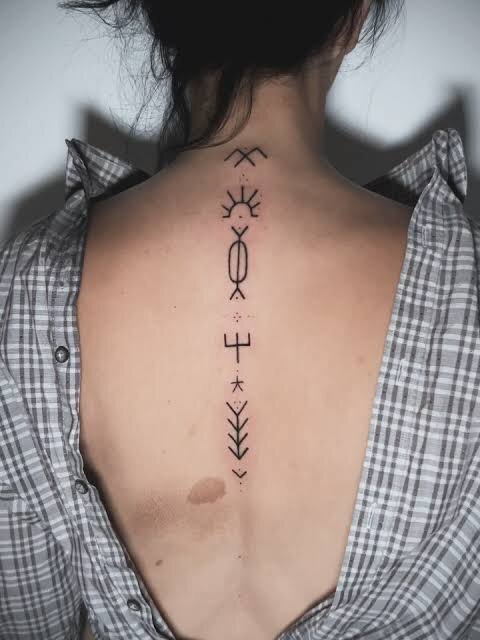
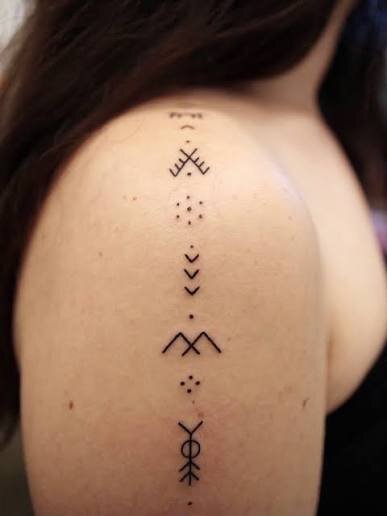
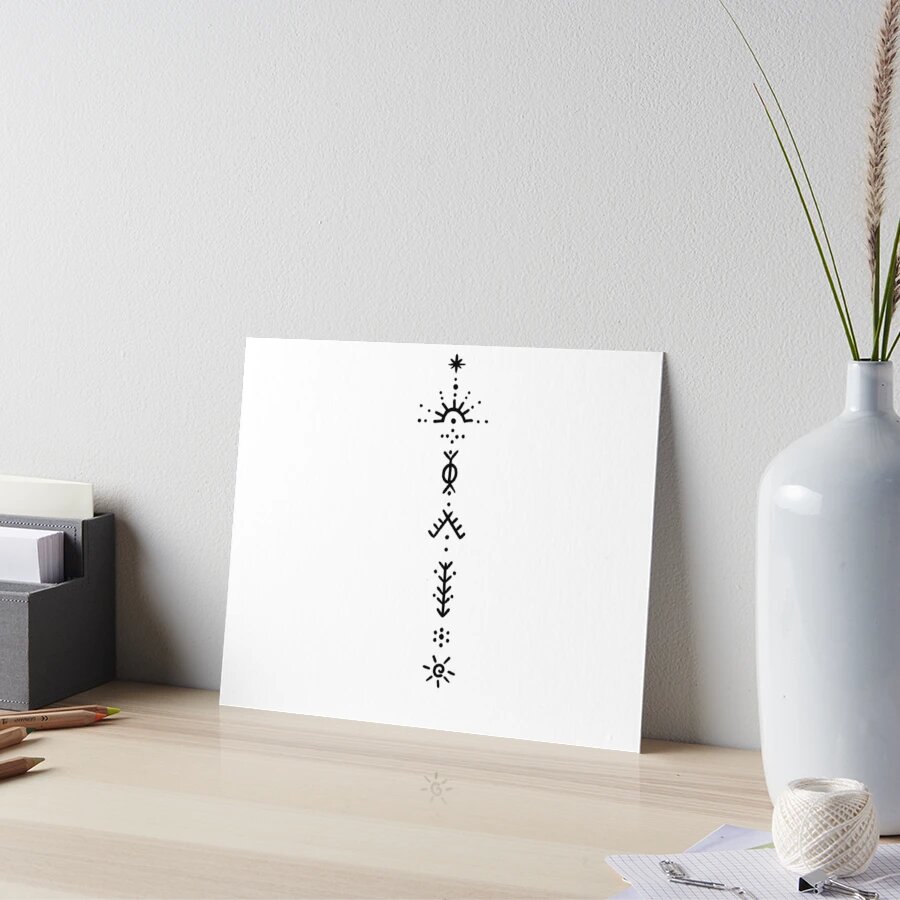
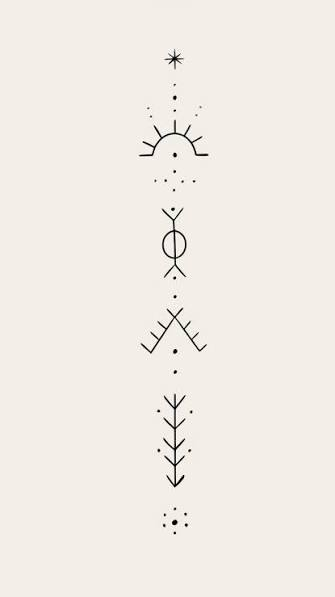
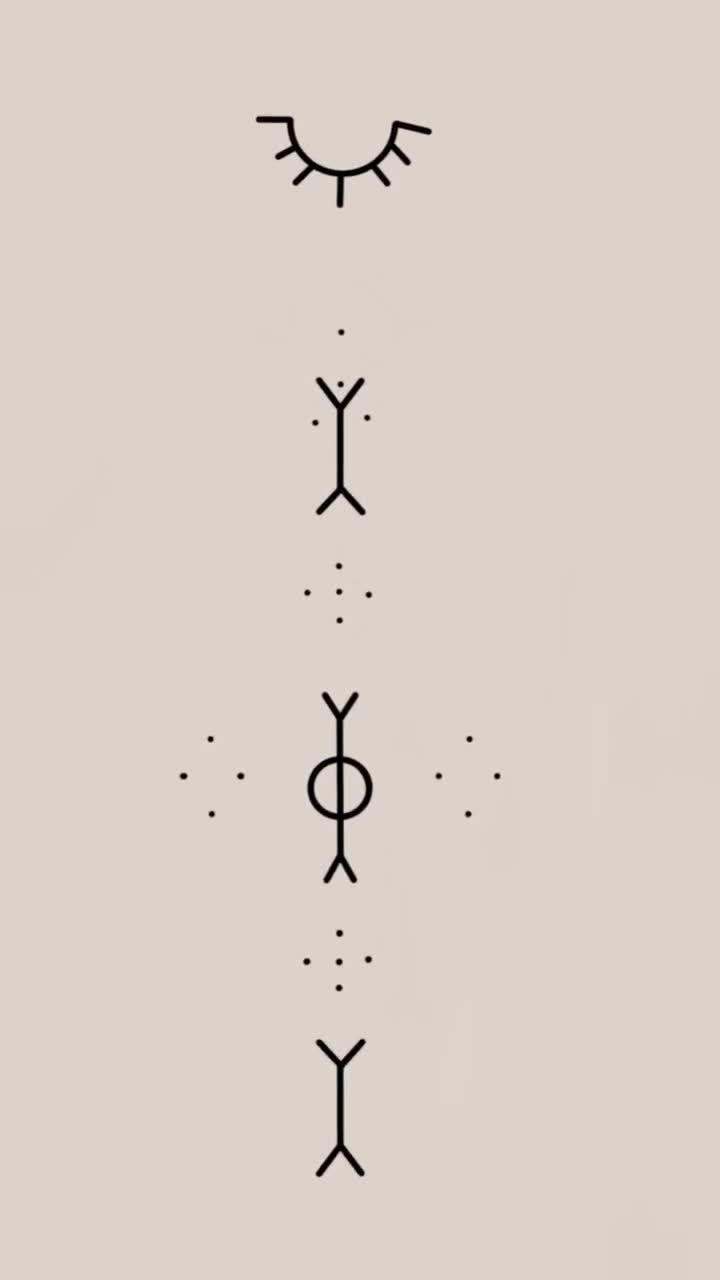
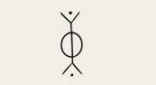
Photos and drawings shared by the project author as examples of deq worn today; their original sources are not known. If you are the author of one of them and want it credited or removed, please open an issue.
The sign: the tree of life
The figure in the logo is a deq sign: a dot, a V shape opening upwards, a line passing through a circle, a V shape opening downwards, and a dot. It is read as the tree of life (or a sacred plant), a symbol of fertility, productivity and life force:
- The circle: the cycle of life, completeness and eternity.
- The line and the V shapes: together they suggest a sprout, wheat or a tree, a wish for a long life, growth and fertility.
- The dots: protective talismans against the evil eye (nazar) and negative energy.
Roj, the sun
The sun at the heart of the figure is Roj, the emblem at the centre of the flag of Kurdistan, drawn with the exact path of the flag's official image. In Kurdish, roj (Kurmanji) and ڕۆژ (Sorani) mean both the sun and the day. On the flag, the yellow sun “represents the source of life and light of the people”, and its 21 rays hold religious and cultural importance in Yazidism, Yarsanism and Alevism.
Why this logo for zimankit
The logo puts the sun of the flag at the heart of a deq sign of life and growth: Kurdish, a living language, carried forward. Deq is also a kind of writing, signs passed from hand to hand that carry meaning, and zimankit is about written Kurdish.
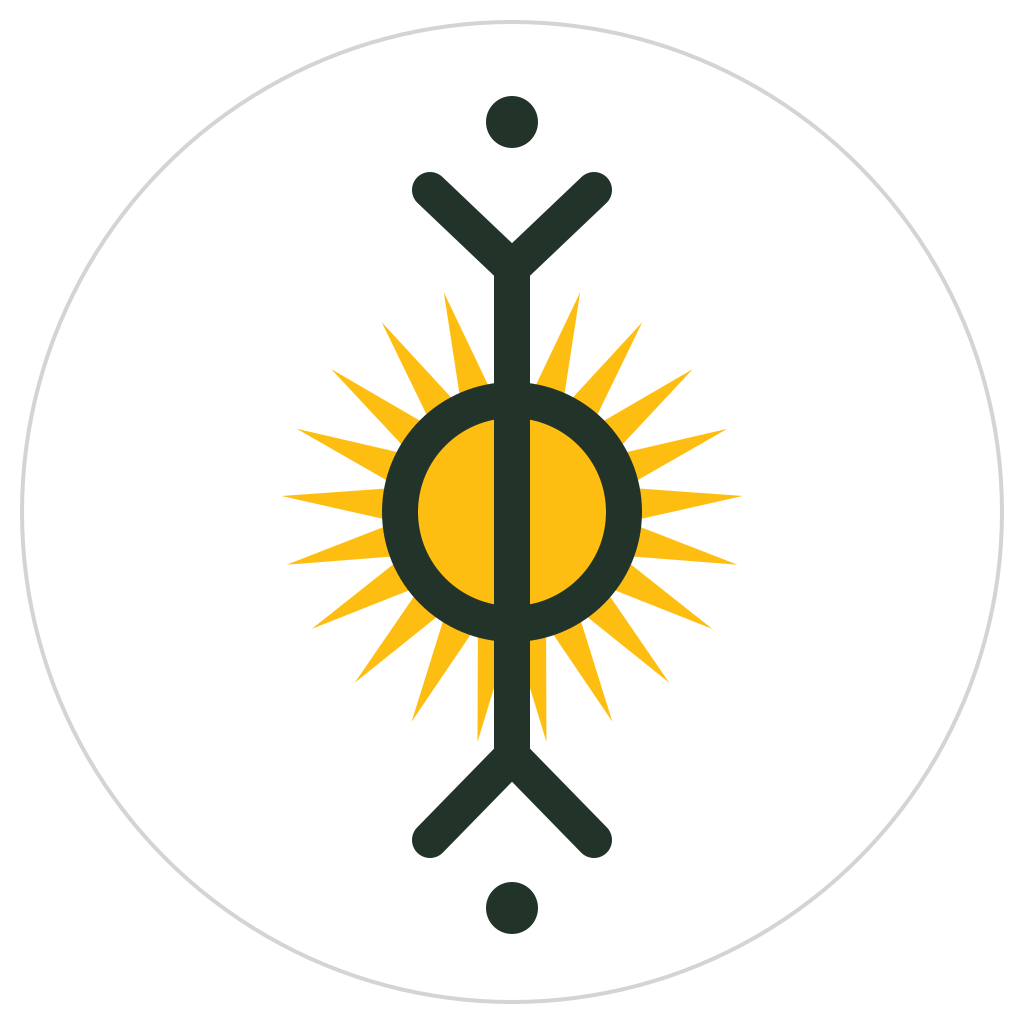
Colours, files and usage are on the brand page.
Sources
On deq
- Deq (tattoo), Wikipedia.
- “The deq tattooist: preserving the ink of a disappearing culture”, Al Jazeera, 8 January 2023.
- “The last tattooed women of Kobane”, National Geographic.
- “Deq: a dying art among Turkey's Kurdish women”, Daily Sabah, 13 January 2016.
- “Skin as memory”, Kurdistan Chronicle.
- “Deq: Kurdish tattooing”, NaTakallam.
- “The evil eye and the needle: preserving cultural heritage”, Institute of Development Studies.
- “Fatê Temel's desire to keep traditional tattooing (deq/xal) alive”, SBS Kurdish.
On Roj and the flag
- “The name and the logo”, Roj.
- Flag of Kurdistan, Wikipedia.
- Flag_of_Kurdistan.svg, Wikimedia Commons, public domain: the sun's path.
- Roj (stêrk), Kurdish Wikipedia; roj and ڕۆژ, Wîkîferheng.

The tree-of-life reading of the sign was supplied by the project author. Deq meanings were passed on orally and vary between regions and families, so no single reading of a sign is the only correct one.